
 (813) 397 8637
A good children’s book can take a child on a magical journey to a different universe, introduce them to a new friend, or teach them something they never knew before. The best part is that you do not need to spend a lot of money to create those moments.
affordable children’s books can offer wonderful stories, colorful pictures, useful lessons, and hours of reading fun without putting too much pressure on a family budget.
For parents, teachers, and caregivers, the challenge is often knowing what makes a book worth buying.
A low price is helpful, but it should not be the only thing you consider. A great book should also match a child’s age, interests, reading level, and curiosity.
The good news is that finding quality books at reasonable prices is easier than it may seem. With a few smart choices, you can build a collection that children actually want to read.
Why Affordable Children’s Books Matter
Books give children something that screens cannot always provide, which is a quiet space to imagine, think, and create their own pictures in their minds. They also help children discover new words, understand different feelings, and learn about people and places outside their everyday lives.
Making Reading Accessible to Every Child
Not every family can spend a large amount on books each month. This is one reason affordable children’s books are so valuable. Lower-cost books make it possible for more children to have stories at home instead of depending only on school or library collections.
Even a small bookshelf at home can make a huge difference. A child who sees books nearby might pick one up while waiting for dinner, on a rainy afternoon, or before bed. Over time, those small reading moments can become a regular habit.
Encouraging a Lifelong Love of Reading
Children are more likely to enjoy reading when they have books that match their interests. A child who loves dinosaurs may happily read a dinosaur adventure several times, while another child may prefer fairy tales, animals, sports, or funny characters.
Having several choices also gives children a sense of control. They can choose what to read instead of feeling that reading is always an assignment. That simple freedom can turn reading from an assignment into something interesting they look forward to.
What Makes a Children’s Book Worth Buying?
Price matters, but value matters more. A book that costs a little more and gets read twenty times may be a better purchase than a very cheap book that stays untouched on a shelf.
Engaging Stories That Capture Attention
A strong children’s story does not need a complicated plot. It might simply follow a curious child who loses a favorite toy, a small animal trying to find its way back home, or friends solving an interesting problem together.
What matters is that children care about what happens next. Humor, adventure, surprise, and relatable characters can all help keep young readers interested. If a child asks, “What happens after this?” the story is doing its job.
Quality Illustrations and Book Design
Pictures are an important part of many children’s books, especially for younger readers. Good illustrations can help explain what is happening, introduce characters, and make unfamiliar ideas easier to understand.
A well-designed book should also have text that is easy to see and pages that are comfortable to handle. For toddlers, strong board pages may be more useful than delicate paper. For older children, a simple paperback may be perfectly suitable.
Age Appropriate Language and Themes
A book should challenge a child without making them feel lost. A beginner reader may need short sentences and familiar words, whereas an older child may enjoy longer chapters and more detailed vocabulary.
Think about the child’s reading ability as well as their age. Two children of the same age may enjoy very different books. The right choice should feel interesting and achievable rather than frustrating.
Educational and Emotional Value
A good story can teach without sounding like a lesson. Children may learn new vocabulary while following an adventure or understand kindness by watching characters help each other.
Books can also help children talk about feelings. A story about friendship, fear, disappointment, or bravery can give a child a safe way to discuss emotions they may find difficult to explain on their own.
How to Find High-Quality Children’s Books on a Budget
Finding good books at low prices often requires a little creativity. You do not have to buy every book brand-new, and you do not have to follow every popular title.
Explore Used and Secondhand Books
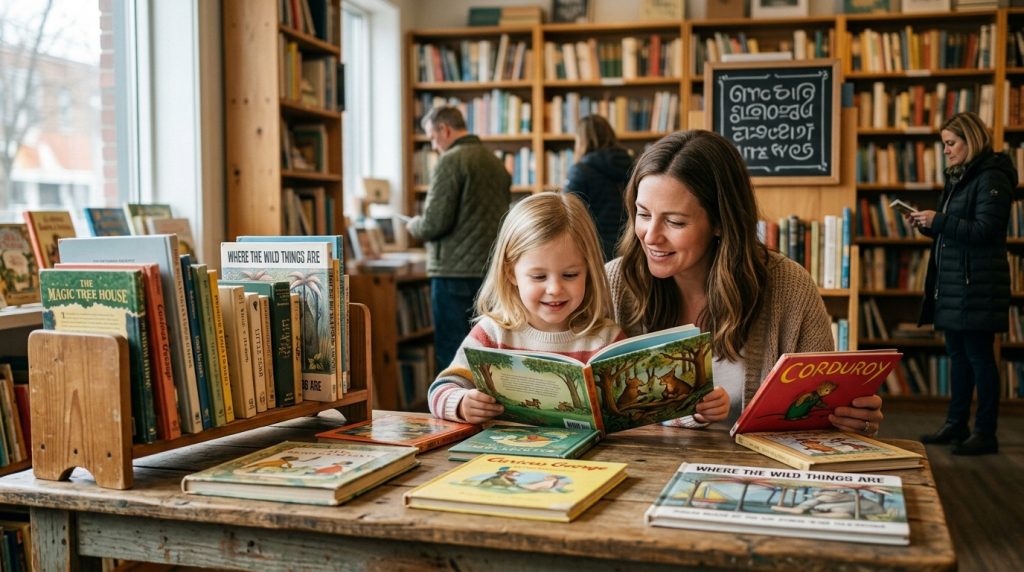
Used bookstores, community book swaps, library sales, and charity shops can be excellent places to find affordable children’s books. Many used books are still in very good condition, especially when children have outgrown them quickly.
Before buying, check the pages and cover for major damage. A little wear is usually fine, but missing pages, heavy writing, or broken bindings may make a book less useful.
Look for Sales, Discounts, and Book Bundles
Bookstores and online sellers often offer discounts during holidays, school seasons, or clearance events. Bundles can also provide several books for less than buying each title separately.
Instead of buying simply because something is on sale, ask whether your child will actually read it. A discount only saves money when the book has real value for your family.
Consider Libraries and Community Book Programs
Libraries are one of the easiest ways to give children access to many stories without buying every book. A child can borrow a few titles, read them, return them, and choose something completely different next time.
Some schools, community centers, and local organizations also hold book exchanges or free reading events. These programs can help families discover new authors and subjects without adding much to their spending.
Choose Affordable Editions Without Sacrificing Quality
Different editions of the same story can have very different prices. A hardcover may be attractive and durable, while a paperback may cost much less and still provide the same story.
For younger children who handle books roughly, durability may be worth paying for. For older readers who take care of their books, a paperback can often offer excellent value.
Best Types of Affordable Children’s Books to Consider

There is no single type of book that works for every child. A balanced collection can include different formats and subjects so children always have something interesting to choose.
Picture Books for Younger Readers
Picture books combine short text with illustrations that help tell the story. They are useful for developing vocabulary, recognizing emotions, and learning how stories work.
Parents can also make picture books more interactive by asking simple questions such as, “What do you think will happen next?” This turns reading into a conversation instead of simply reading words from a page.
Early Readers for Building Confidence
Early readers are designed for children who are beginning to read independently. They often use short sentences, familiar words, repeated patterns, and helpful illustrations.
Finishing a book on their own can give children a real sense of achievement. That confidence can encourage them to choose another book and keep practicing.
Chapter Books for Growing Readers
As children’s reading skills improve, chapter books can introduce longer adventures and more developed characters. Stories about mysteries, friendship, fantasy, school life, or exciting journeys can keep older children interested.
You do not need to buy an entire series at once. Start with one book and see whether the child enjoys it before spending money on the rest.
Educational and Activity Books
Workbooks, puzzles, coloring books, activity books, and simple nonfiction titles can add variety to a child’s reading collection. They can also support skills such as spelling, counting, observation, and problem-solving.
These books are especially useful when children want something they can interact with rather than simply read from beginning to end.
How to Choose Books Based on a Child’s Age and Interests
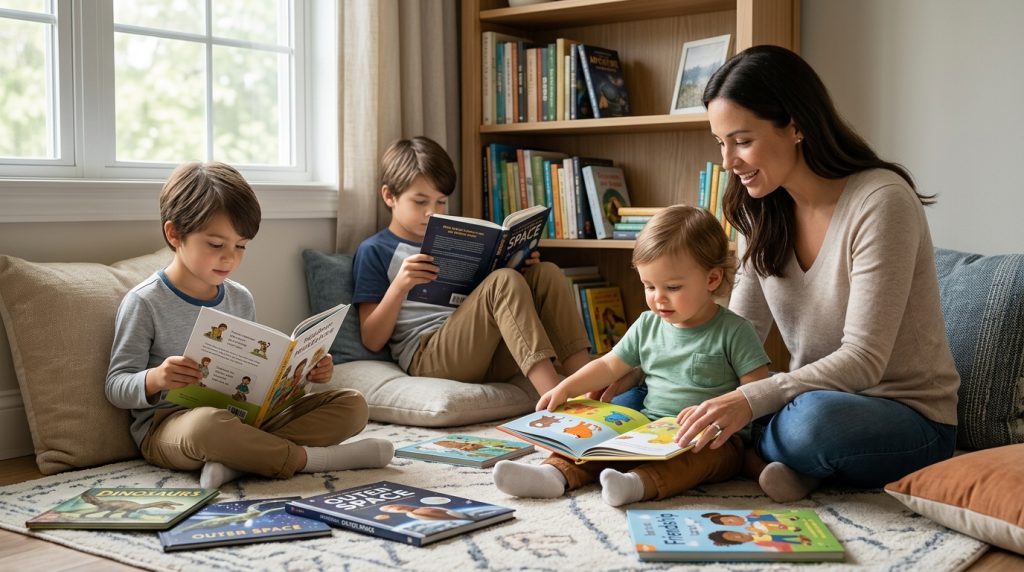
A book becomes much more valuable when it fits the child who will read it. Before buying, think about what makes that child curious and excited.
Books for Toddlers and Preschoolers
Young children often enjoy repetition, familiar objects, animals, bright pictures and simple stories. Books with sturdy pages are helpful because little hands may not always turn pages gently.
Reading the same story again and again is also perfectly normal. Repetition helps children remember words, understand patterns, and feel comfortable with the story.
Books for Early Elementary Readers
Children at this stage may enjoy funny stories, school adventures, animals, superheroes, sports, or stories about friendship. Books should give them enough challenge to practice reading while still allowing them to understand most of the text.
Let children browse and make some choices themselves. Their interests may surprise you.
Books for Older Children
Older readers often enjoy mysteries, fantasy, science, history, adventure, biographies, and nonfiction. Look for subjects they already care about, then use those interests to introduce related topics.
A child who loves space, for example, might enjoy a fictional space adventure first and later become interested in a simple book about planets and astronauts.
Smart Ways to Build a Children’s Home Library on a Budget

Building a home library does not mean filling an entire room with books. A small collection that children regularly use can be far more valuable than a large shelf they ignore.
Start With a Small Collection of Favorites
Choose a few books that match your child’s interests and reading level. Watch which ones they return to most often. Those favorites can guide future purchases.
This approach also prevents money from being spent on books that looked interesting but do not suit the child.
Mix New, Used, Borrowed, and Gifted Books
A smart library can contain books from many sources. Buy a new favorite, borrow unfamiliar titles from the library, accept gently used books from relatives, and swap books with other families.
This simple mix can keep reading fresh while keeping costs under control.
Rotate Books to Keep Reading Fresh
Children sometimes forget about books they already own. Try putting some books away for a few weeks and bringing them back later. A familiar story may suddenly feel exciting again.
You can also keep a few seasonal books available, such as stories about winter, holidays, school, or summer adventures.
Common Mistakes to Avoid When Buying Cheap Children’s Books
Buying on a budget is smart, but there are a few traps to avoid. The cheapest option is not automatically the best choice.
- Choosing the Lowest Price Over Quality: A very cheap book may have poor printing, weak pages, awkward writing, or a story that does not hold a child’s attention. Always consider the overall value rather than looking at the price alone.
- Buying Books That Are Not Age-Appropriate: A book that is too difficult may discourage a young reader. One that is far too simple may fail to keep an older child interested. Check the recommended age or reading level when available.
- Ignoring a Child’s Interests: Adults may love certain books that children simply do not care about. If your child loves animals but you keep buying books about subjects they dislike, those books may remain unread.
- Buying Too Many Books at Once: A huge pile of new books can be exciting at first, but children may quickly lose interest. Buying a few carefully chosen titles gives each book more attention.
How to Get the Best Value from Every Children’s Book
The value of a children’s book does not end after the first reading. Favorite stories can become part of bedtime routines, family conversations, classroom activities, or quiet afternoon reading.
Encourage children to reread books they enjoy. Repeated reading is useful because children notice new details, remember vocabulary, and become more confident with familiar sentences.
Taking care of books also helps them last longer. Keep them away from water, use a safe shelf or storage box. When books stay in good condition, younger siblings or friends can enjoy them later.
Affordable Children’s Books Can Still Create Lasting Memories
Some of the books children remember as adults are not necessarily the most expensive ones. They may remember a silly character, a bedtime story read by a parent, or the book they carried everywhere for a whole summer.
That is why affordable children’s books can be such a meaningful choice. What matters most is not the price printed on the cover. It is the experience the story creates.
A simple book can inspire a child to draw a picture, ask a question, invent a new game, or imagine a completely different world. Those moments can stay with them long after they have finished reading.
Conclusion
Building a child’s reading collection does not require a large budget. Parents can find great stories through library sales, book exchanges, discounts, used bookstores, and local community programs. They can also save money by choosing editions that match how and where a child will use the book.
The key is to focus on the value it provides, not just the price. Choose stories that match a child’s age, reading ability, and interests. A small collection of books that children love can be more valuable than a shelf full of titles they never open.
With thoughtful choices, affordable children’s books can bring learning, laughter, imagination, and memorable reading moments into any home.
Frequently Asked Questions
Affordable children’s books are reasonably priced books that offer children enjoyable stories, useful lessons, and engaging illustrations without costing too much. They can include new, used, paperback, discounted, or library-sale books. A low price does not always mean low quality; the key is finding books that provide good value for the child.
You can find affordable children’s books at used bookstores, library sales, charity shops, book exchanges, discount stores, and online marketplaces. Libraries are another great option because children can borrow many books for free. Seasonal sales and multi-book bundles can also help families save money.
Start by checking whether the story matches the child’s age, reading level, and interests. Look for clear writing, appealing illustrations, durable pages, and positive or meaningful themes. When buying used books, check that the pages are complete and the binding is in good condition. Reviews and recommendations from teachers, librarians, and other parents can also help.
Yes. Affordable books can be excellent for early readers when they use simple vocabulary, short sentences, familiar words, and engaging pictures. Early readers benefit from practicing with books they can understand and enjoy. Used books and discounted beginner-reading sets can also provide plenty of practice without a large expense.
Parents should look for age-appropriate content, engaging stories, clear language, useful illustrations, and good physical quality. It is also important to consider the child’s interests. A reasonably priced book that a child enjoys reading repeatedly is usually a better investment than a cheaper book that sits untouched.
The price can vary widely depending on the book’s format, condition, publisher, and where it is purchased. Used books and library-sale copies may cost only a small amount, while discounted new paperbacks can cost a few dollars or more. Because prices change by location and seller, comparing several options is the best way to find a good deal.
Absolutely. A lower price does not automatically mean poor illustrations. Many budget-friendly books feature colorful, creative, and professionally designed artwork. Used books, older editions, paperback versions, and discounted titles can offer excellent illustrations while costing less than newer or premium editions.
They make it easier for families to give children regular access to stories without spending a large amount of money. Affordable books can support vocabulary, imagination, creativity, emotional development, and a love of reading. Families can also build a varied home library by combining new, used, borrowed, and gifted books.
Start Building Your Child’s Book Collection Today!
Don’t wait to build your child’s reading habit! Discover affordable children’s books packed with engaging stories, vibrant pictures, and valuable lessons all without breaking your budget.