
 (813) 397 8637
Writing a children’s book is an exciting achievement. Whether your story is about a brave little rabbit, a curious dinosaur, or a child learning an important life lesson, finishing the manuscript is something to celebrate.
But once the writing is done, many authors ask the same question. What comes next?
Publishing a children’s book is more than uploading a file and waiting for readers to find it. It involves editing, illustrations, formatting, choosing the right publishing path, and sharing your book with the world.
Every step helps turn your idea into a polished book that children, parents, teachers, and librarians will enjoy.
If you are wondering how to publish a children’s book, this guide will walk you through the entire process. You’ll learn what to prepare, which decisions matter most, and how to avoid common mistakes along the way.
What You Need Before Publishing a Children’s Book
If you are thinking about printing or selling your book, make sure the foundation is strong. Before printing, make sure you do a little preparation that can save you time, money, and frustration later.
Finish and Revise Your Manuscript
Your first draft is just the beginning, you need to read your story several times and look for anything that feels confusing or unnecessary. Every sentence should help move the story forward or teach something valuable.
Reading your story out loud is a simple trick that works well. It helps you notice awkward sentences, repeated words, and places where the story feels slow.
Since children often hear books before they read them, your writing should sound natural when spoken.
Know Your Target Age Group
Children’s books are written for different age groups, and each group has different needs.
For example, picture books usually have fewer words, and they rely heavily on illustrations. Early readers use simple vocabulary, while chapter books include longer stories and more detailed plots. Knowing about your audience helps you choose the right language, story length, and design.
Understand the Different Types of Children’s Books
Children’s books come in many different styles. Educational books, Picture books, activity books, bedtime stories, early readers, and middle grade novels all serve different purposes.
Take some time to explore books similar to yours. Visit a library or bookstore and analyze how they are written, organized and illustrated. This research can give you ideas without copying someone else’s work.
Step 1: Edit Your Children’s Book
Editing is one of the most important parts of publishing. Even experienced authors rarely publish their first draft without making changes.
Start by editing the manuscript yourself. Look for grammar mistakes, spelling errors, repeated words, and sentences that could be clearer.
Then ask trusted friends, parents, or teachers to read your story. Honest feedback helps you spot things you may have missed.
If your budget allows, hiring a professional editor is a smart investment. An editor can improve the flow of your story while making sure it is suitable for your chosen age group.
A polished manuscript creates a much better reading experience. Parents appreciate well-written books, and young readers stay interested when the story flows naturally from beginning to end.
Step 2: Create or Hire Professional Illustrations
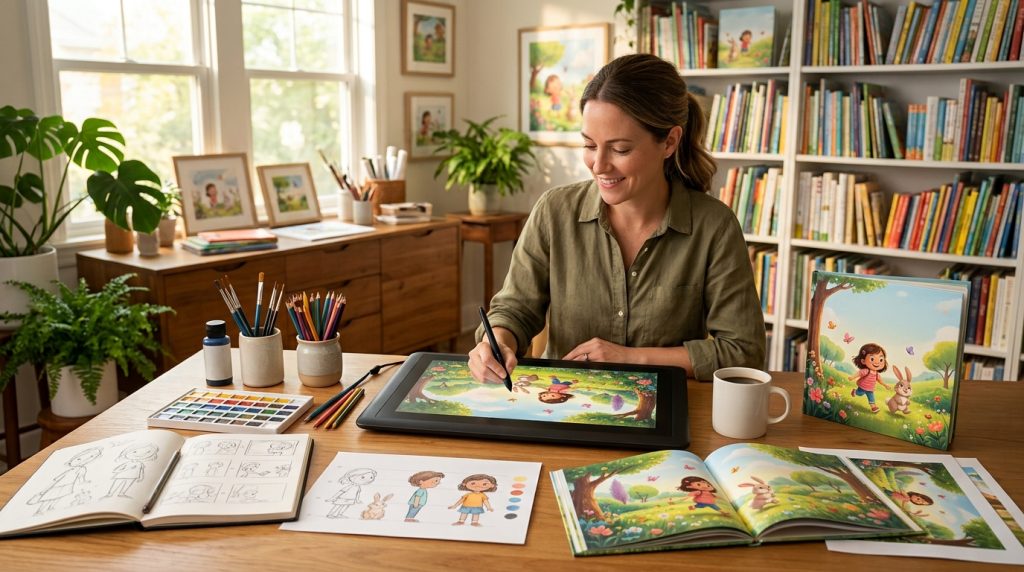
Illustrations are often the first thing children notice. Bright, expressive artwork captures attention and helps tell the story in ways that words cannot.
If you are an artist, you may choose to illustrate your own book. Otherwise, consider hiring a professional illustrator who has experience creating children’s books.
Before hiring someone, review their portfolio carefully. Make sure their style matches the feeling of your story.
A funny adventure may need playful illustrations, while a bedtime story may benefit from soft, calming artwork.
It is also important to discuss ownership rights before any work begins. Both you and the illustrator should clearly understand who owns the artwork and how it can be used in the future.
Consistency matters too. Every character should look the same from page to page, and the colors and style should remain uniform throughout the book.
Step 3: Design Your Book for Print and Digital Formats
Book design affects how easy and enjoyable your book is to read, therefore, a great story deserves a professional presentation.
Start with the interior layout. Leave enough space around the text, choose a child-friendly font, and make sure the illustrations fit comfortably on each page. Avoid overcrowding pages with too much text.
Your cover should grab attention immediately because it is often the first thing people see online or in stores. A colorful, high-quality cover encourages readers to pick up your book.
If you plan to sell an ebook, make sure it displays properly on different devices. Text, images, and page layouts should remain clear whether someone is reading on a tablet, phone, or e-reader.
Professional formatting helps readers focus on the story instead of design problems. It simply enhances your book’s overall appearance and makes it look polished.
Step 4: Choose the Right Publishing Method
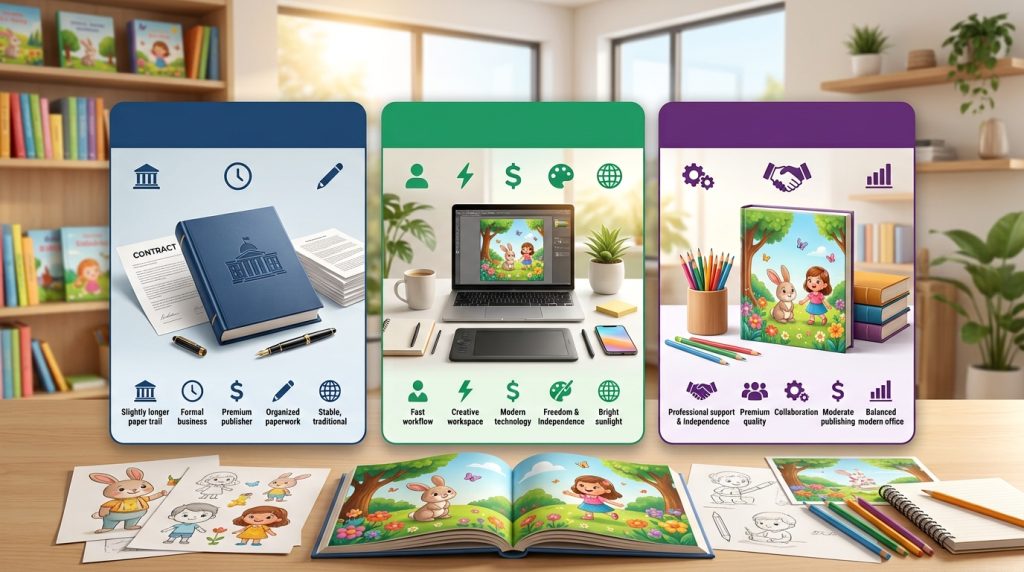
There is no single publishing path that works for every author. The best option depends on your goals, requirements, budget, and how much control you want over the whole process.
Traditional Publishing
Traditional publishers handle editing, design, printing, and distribution. They may also help with marketing.
However, getting accepted can be challenging. Most publishers receive thousands of submissions every year, so competition is high.
The process also takes longer, and authors usually have less control over creative decisions.
Self-Publishing
Self-publishing gives you complete control over your books publishing process. You decide the illustrations, cover, pricing, and publishing schedule.
Many first-time authors choose this option because it allows them to publish much faster. While you are responsible for managing the process, you also keep greater creative freedom.
If you are learning how to publish a children’s book, self-publishing is often a practical starting point because it lets you bring your story to readers without waiting for publisher approval.
Hybrid Publishing
Hybrid publishing basically combines parts of the self-publishing process and traditional publishing.
Authors usually pay for professional publishing services and still keep more control over the project. This option works well for writers who want expert support without giving up ownership of their work.
Before signing with any hybrid publisher, carefully review the contract and understand exactly what services are included.
Step 5: Prepare Your Book for Publication
Before your book officially goes live, several important details you need to keep in mind.
These include:
- Register your copyright to protect your work.
- Purchase or assign an ISBN if needed.
- Write a clear and engaging book description.
- Select the right categories and keywords.
- Set a price that matches similar books in your market.
- Double-check every page for formatting or spelling issues.
These details may seem small, but they help create a professional first impression and let readers discover your book.
Step 6: Publish Your Children’s Book
Once everything is ready, it is time to publish.
Publishing on Amazon KDP
Many independent authors choose Amazon Kindle Direct Publishing because it is easy to use and offers both ebook and paperback publishing.
After creating an account, you upload your manuscript, cover, and book information. Once approved, your book becomes available for customers to purchase.
Using IngramSpark
IngramSpark helps authors distribute books to bookstores, libraries, and online retailers around the world.
This option is very useful if you want wider print distribution beyond online marketplaces.
Working with Independent Publishers
Independent publishers often accept projects that larger publishing houses may overlook. Some also provide editing, design, printing, and marketing support.
Research about each independent publisher carefully before submitting your manuscript. Make sure they have experience publishing children’s books and a good reputation within the industry.
Step 7: Market Your Children’s Book After Publishing
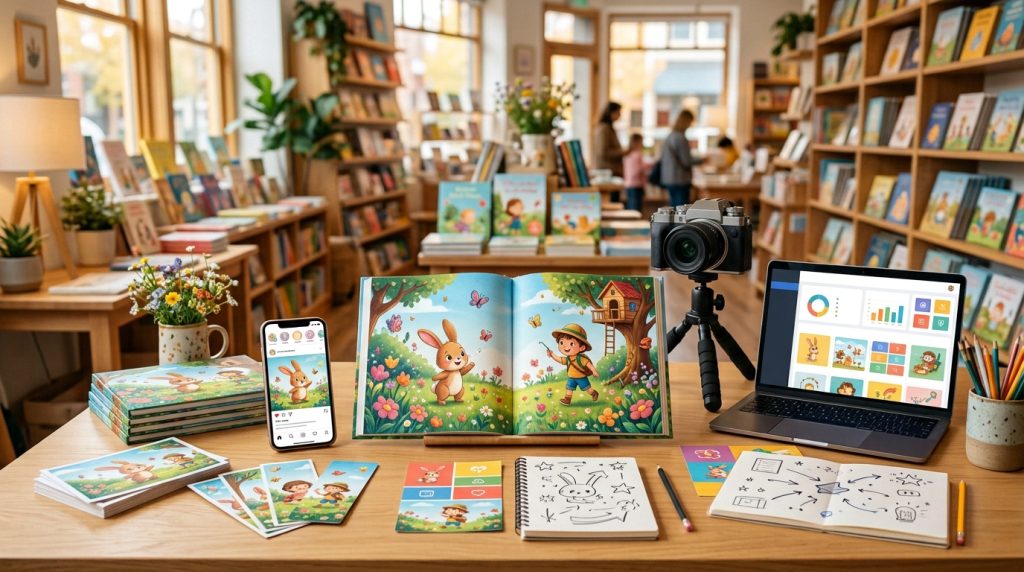
Publishing your book is just the beginning, readers need to know your book exists before they can enjoy it.
Start by creating a simple author website where visitors can learn about you and your books. Share updates, behind-the-scenes stories, and upcoming events.
Social media is another great way to connect with parents, teachers, and book lovers. Share illustrations, reading videos, or fun facts related to your story.
You can also visit schools, libraries, and local bookstores for story time events or book signings. These activities help build personal connections with readers.
Encourage early readers to leave honest reviews. Positive reviews increase trust and help more people discover your book online.
Marketing does not have to be expensive. Consistency matters much more than spending large amounts of money.
Common Mistakes to Avoid When Publishing a Children’s Book
Many first-time authors make avoidable mistakes that affect their book’s success.
One common mistake is rushing to publish before the manuscript is fully edited. Small grammar mistakes can make a book appear less professional.
Another mistake is using low-quality illustrations. Since children’s books depend heavily on visuals, poor artwork can discourage readers.
Some authors also choose the wrong target audience. A story written for five-year-olds should not use language meant for teenagers.
Weak cover designs, poor formatting, and launching without a marketing plan are other issues that can limit your book’s reach.
Taking a little extra time before publishing often leads to a much better final product.
How Much Does It Cost to Publish a Children’s Book?
Publishing costs vary depending on how much work you do yourself and which professionals you hire.
Editing, illustrations, cover design, formatting, printing, and marketing all have different price ranges. A simple picture book may cost much less than a fully illustrated hardcover edition with custom artwork.
Some authors keep costs low by learning new skills and handling parts of the process themselves. Others prefer hiring experienced professionals to achieve the highest quality.
Instead of focusing only on the cheapest option, think of publishing as an investment in your book. Quality improvements often lead to happier readers and stronger long-term results.
Conclusion
Publishing a children’s book is a journey filled with creativity, careful planning and learning.
Every stage, from editing your manuscript to sharing your finished book with readers, plays an important role in creating something children will remember.
As you move forward, focus on producing the best book you can rather than rushing to the finish line. Strong storytelling, beautiful illustrations, thoughtful design, and steady promotion all work together to give your book the best chance of success.
Whether you choose traditional publishing, hybrid approach, or self-publishing remember that every successful author started with a single story and the determination to share it.
By following these steps and continuing to learn, you’ll better understand how to publish a children’s book and confidently bring your ideas to life for young readers everywhere.
Frequently Asked Questions
If you’re publishing a children’s book for the first time, start by completing and revising your manuscript. Once it’s polished, decide whether you’ll use traditional publishing, self-publishing, or hybrid publishing. After that, focus on professional editing, illustrations, book design, and formatting before publishing your book through your chosen platform or publisher. Finally, promote your book so readers can discover it.
The main steps include finishing your manuscript, editing the content, creating illustrations, designing the interior and cover, choosing a publishing method, preparing important details like your ISBN and book description, publishing the book, and marketing it to your target audience. Following each step carefully helps create a professional final product.
The cost depends on the services you need. Expenses may include editing, illustrations, cover design, formatting, ISBN registration, and marketing. Authors who handle some tasks themselves can reduce costs, while hiring professionals usually requires a larger budget but often results in a higher-quality book.
The timeline varies based on your publishing method and how prepared your manuscript is. Self-publishing can take anywhere from a few weeks to several months, while traditional publishing often takes one to two years because of submissions, reviews, editing, and production schedules.
It depends on the type of children’s book you’re creating. Picture books rely heavily on illustrations, so professional artwork is usually essential. For chapter books aimed at older children, illustrations may be limited or not required at all. If you’re not an illustrator, hiring an experienced professional can greatly improve your book’s appeal.
The right choice depends on your goals. Traditional publishing offers professional support and wider distribution but can be competitive and time-consuming. Self-publishing gives you complete creative control, faster publishing, and higher royalty potential, although you’ll be responsible for managing most parts of the publishing process yourself.
Start by researching publishers that specialize in children’s books. Read their submission guidelines carefully and make sure your manuscript fits the types of books they publish. You can also work with a literary agent, attend writing conferences, and join children’s writing organizations to connect with publishers and industry professionals.
Successful children’s books usually combine an engaging story, relatable characters, age-appropriate language, and high-quality illustrations. A strong cover, professional editing, and effective marketing also play important roles. Most importantly, the book should entertain, educate, or inspire young readers while offering value to parents, teachers, and caregivers.
Begin by revising your manuscript several times and correcting grammar, spelling, and sentence flow. Ask beta readers for honest feedback and consider hiring a professional editor. Once the text is finalized, make sure it matches your target age group and is ready for illustrations, formatting, and publication.
Many traditional publishers provide editing, cover design, illustration coordination, and some marketing support. However, the level of assistance varies from one publisher to another. Self-publishing authors usually arrange these services independently or hire professionals, while hybrid publishers often offer them as part of paid publishing packages.
Ready to Publish Your Children’s Book?
Now that you know exactly how to publish a children’s book, it’s time to take the next step. Don’t let your story sit unfinished every great author started right where you are now.
Whether you choose self-publishing, traditional publishing, or a hybrid approach, the most important step is to start today.